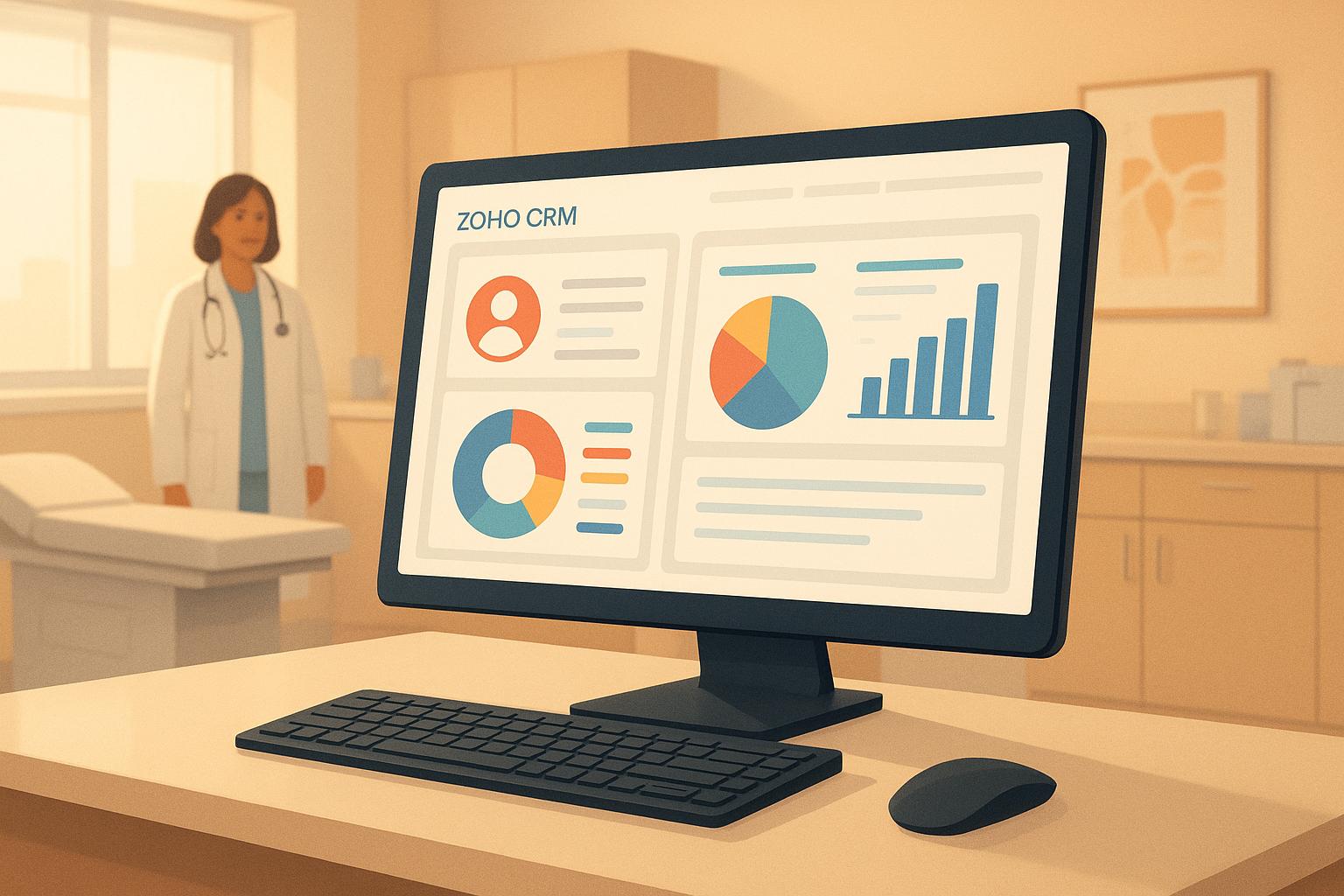
Managing patient data is one of the biggest challenges in healthcare today. Zoho CRM simplifies this process by centralizing information, automating tasks, and improving data security. Here’s what you need to know:
- Centralized Data: Consolidates patient records from multiple sources into one accessible hub.
- Automation: Handles routine tasks like appointment reminders, follow-ups, and reporting, saving time and reducing errors.
- Data Security: Offers encryption, access controls, and audit logs to protect sensitive health information.
- Integration: Connects seamlessly with EHRs and other healthcare systems for smooth data flow.
- Custom Reporting: Provides tools to create tailored reports for better decision-making.
Zoho CRM not only streamlines operations but also helps healthcare providers focus on delivering better care while staying compliant with regulations like HIPAA. Whether you’re a small clinic or a large hospital, Zoho CRM can transform how you manage patient data.
Organizing Patient Data with Zoho CRM
Storing All Patient Records in One Place
Managing patient information across multiple systems can be a logistical nightmare, creating gaps in health histories and making it harder to provide effective care. Zoho CRM steps in as a centralized hub, bringing all patient records together in one place. This means healthcare organizations can collect, store, and access patient data seamlessly, regardless of the source.
The platform integrates data from various channels, such as webforms, API connections, manual entries, and third-party systems, into a single, unified record for each patient. This consolidation ensures that healthcare providers have a complete and accurate view of patient information whenever they need it.
Because Zoho CRM operates on a cloud-based infrastructure, it’s designed to adapt to the specific needs of healthcare organizations. Whether it’s scaling up storage or adjusting computing power, the platform offers the flexibility to handle changes as they arise.
Of course, with all this data in one place, keeping it secure is a top priority – which brings us to compliance and protection.
Keeping Patient Data Safe and Compliant
In healthcare, safeguarding patient data isn’t just a best practice – it’s a legal necessity. With over 176 million patients in the U.S. impacted by breaches of protected health information (PHI), most due to employee errors or HIPAA violations, organizations must take data security seriously.
Zoho CRM provides tools to help healthcare providers protect sensitive information and meet compliance standards:
"In Zoho CRM, we provide ways for healthcare organizations to secure and restrict export of individuals’ health information and stay compliant with the HIPAA guidelines."
However, it’s important to note that Zoho CRM isn’t HIPAA compliant out of the box. To meet these requirements, healthcare organizations must configure the system appropriately, starting with signing a Business Associate Agreement (BAA) with Zoho.
Here’s how Zoho CRM helps secure patient data:
- Field Encryption: Sensitive data, such as surgical history or medication details, can be encrypted using AES and AES-256 encryption. This ensures that even if data is intercepted, it remains unreadable without the correct decryption keys.
- Access Control: Organizations can restrict who has access to personal health information, both within the CRM and through APIs. This ensures only authorized personnel can view or modify sensitive data.
- Audit Logs: Regularly exporting and preserving audit logs allows healthcare providers to track who accessed patient information and when. These logs are essential for both compliance and monitoring potential security issues.
- Third-Party Integrations: To maintain compliance, healthcare organizations must carefully manage integrations and disable any non-compliant Zoho services.
Setting Up Automated Workflows and Reports
Automating Routine Healthcare Tasks
Centralized patient records are a game-changer, but automation takes healthcare operations to the next level by streamlining routine tasks that often consume valuable time. With automation, healthcare providers can focus more on patient care and less on repetitive administrative work.
For instance, the platform enables healthcare organizations to automate workflows for appointments, handling scheduling, rescheduling, cancellations, and reminders without manual intervention. These workflows can be triggered by specific events – like when an appointment is scheduled, completed, overdue, or changed – saving both time and resources by automatically gathering necessary information.
To set this up, healthcare providers can navigate to Setup > Automation > Workflow Rules. From there, they define the conditions under which the rule should execute – such as scheduling or canceling an appointment – and specify which records the rule applies to. Once configured, users can choose between instant actions, like sending email notifications, or scheduled actions, such as updating patient details.
But it doesn’t stop at appointments. Zoho CRM can also automate follow-ups, medication reminders, and routine check-ins. For example, after a patient’s initial consultation, the system can automatically schedule follow-up reminders at set intervals, ensuring no patient is overlooked.
Creating Custom Reports for Better Insights
Zoho CRM’s custom reporting tools turn scattered patient data into actionable insights, helping healthcare providers make informed decisions.
The process begins by selecting a primary module and linking related modules to create a comprehensive view of patient information. This setup allows healthcare organizations to analyze care patterns, treatment outcomes, and operational metrics by establishing relationships between different data sets.
Customization options include modifying columns, applying filters, grouping data, and aggregating results to meet specific needs. For example, a clinic might generate a report identifying diabetic patients who haven’t had a check-up in six months or track medication adherence across various demographics.
Reports can be further tailored by grouping or aggregating data, applying filters to highlight specific details, and restricting access to sensitive fields based on user permissions. This flexibility ensures that everyone – from nurses to administrators – can access the data they need in a format that suits their role. And with real-time reporting, healthcare providers get instant access to current data, eliminating the delays associated with monthly or quarterly reports.
Manual vs. Automated Reporting Comparison
The shift from manual to automated reporting is more than just a time-saver – it redefines how healthcare organizations manage and use data. Here’s a quick comparison:
| Aspect | Manual Reporting | Automated Reporting |
|---|---|---|
| Efficiency and Speed | Slow and time-intensive | Instant updates in real time |
| Accuracy | Prone to errors | Minimizes mistakes, ensuring precision |
| Compliance | Risk of oversight | Automatic updates maintain compliance |
| Administrative Burden | High workload for staff | Frees up staff for more critical tasks |
| Decision-Making | Limited insights | Data-driven decisions with better context |
| Scalability | Difficult to expand | Easily adapts to organizational growth |
| Data Security | Vulnerable to breaches | Advanced security measures, encrypted data |
Automation’s impact on healthcare is undeniable. Robotic Process Automation (RPA), for instance, can cut lab report management time by 65% and ensure 100% accuracy in updating patient records – critical in an industry where errors can directly affect patient safety.
By providing real-time data and analytics on patient trends, treatment outcomes, and operational efficiency, automated reporting empowers healthcare providers to make quick, informed decisions. Whether it’s adjusting a treatment plan based on updated information or identifying issues before they escalate, automation ensures healthcare organizations stay ahead.
This shift doesn’t just boost efficiency; it transforms healthcare operations. With automation handling administrative tasks, medical professionals can concentrate on delivering quality care while maintaining the highest standards of accuracy and compliance. And when integrated with other Zoho CRM healthcare tools, these features enhance overall productivity even further.
Connecting Zoho CRM with Other Healthcare Systems
Working with EHRs and Practice Management Systems
Healthcare organizations rely on a mix of systems, from EHRs to billing platforms, to manage daily operations. Zoho CRM’s ability to integrate with these systems creates a connected ecosystem that eliminates data silos and enhances overall efficiency. This seamless setup ensures patient data flows smoothly across platforms.
By using secure API connections, healthcare providers can synchronize patient data in real time while adhering to HIPAA regulations.
For example, a 2025 case study highlighted the integration of eClinicalWorks with Zoho CRM. This setup, which included real-time data synchronization and automated lead capture, led to impressive results: a 40% increase in lead conversions, a reduction in response times from 24 hours to under 2 hours, and a 60% drop in manual data entry tasks.
Automation tools further enhance these integrations. Zoho RPA, for instance, simplifies tasks like extracting data from medical records, retrieving lab results, and importing spreadsheets into EHR systems. This level of automation has been shown to reduce insurance claim processing time by up to 80%, significantly improving administrative workflows.
The integration process typically includes essential features such as automated lead capture to ensure no patient inquiries are missed, real-time demographic synchronization to keep records updated, and two-way notes synchronization for consistent communication.
| Feature | Benefit |
|---|---|
| Automated Lead Capture | Ensures no inquiries are missed and follow-ups are timely |
| Real-Time Demographic Sync | Keeps patient records accurate across all systems |
| Marketing Automation | Enables personalized and timely patient engagement |
| Bi-Directional Notes Sync | Maintains a unified history of communications |
| Custom Dashboards | Provides actionable insights for strategic decision-making |
How Connected Systems Improve Patient Care
When healthcare systems are seamlessly connected, the impact on patient care is immediate and meaningful. Integrated systems allow providers to deliver more personalized and proactive care. For instance, the same multi-specialty practice that paired eClinicalWorks with Zoho CRM reported a 35% improvement in appointment adherence due to automated reminders. Patient satisfaction scores also rose significantly, from 82% to 93%.
These connections also enhance patient engagement. By segmenting patient lists based on clinical data, providers can send targeted reminders for follow-ups, preventive care, or health screenings. The practice also experienced an 18% revenue boost by upselling preventive care packages, demonstrating how better data coordination can drive both improved outcomes and financial gains.
Integrated systems offer powerful dashboards that combine clinical, marketing, and financial data. This enables administrators to make informed decisions by tracking metrics like patient acquisition costs, treatment outcomes, and operational bottlenecks – all from a single interface.
Security is a top priority in these integrations. Middleware ensures HIPAA compliance while facilitating secure data exchanges. Regular monitoring and annual compliance reviews help maintain the integrity of protected health information.
For healthcare organizations looking to integrate systems, success hinges on setting clear objectives, standardizing field mapping for records and appointments, and providing thorough staff training during phased rollouts. When done correctly, these connected systems replace disjointed, manual processes with streamlined workflows that prioritize patient care without compromising data security or regulatory compliance.
sbb-itb-058cafb
Customizing Zoho CRM for Your Healthcare Practice
Tailoring Zoho CRM to Fit Your Practice
Healthcare practices come in all shapes and sizes, from small family clinics to sprawling multi-specialty hospitals. Zoho CRM offers the flexibility to adapt its features to meet the specific needs of each organization, making it a valuable tool for managing workflows and patient care.
Start by creating modules tailored to healthcare. For example, you can set up sections for patient treatment plans, detailed medical histories, and billing records. Custom fields, buttons, and layouts allow you to capture the exact patient information your practice requires.
Conditional fields make data entry more efficient by displaying only the information relevant to a specific scenario. For instance, if a user selects "cardiology consultation", fields related to heart health can appear, while unrelated sections remain hidden.
For more advanced needs, custom functions allow you to integrate Zoho CRM with other systems like ERP platforms, accounting software, or order management tools already in use. This ensures that all your data flows smoothly across platforms.
The drag-and-drop interface makes it easy to design layouts that prioritize critical patient data while removing unnecessary fields. Additionally, customizable dashboards let you track key metrics such as patient satisfaction scores or appointment no-show rates, giving you a clear view of your practice’s performance.
These customizations not only enhance the functionality of Zoho CRM but also prepare your team for successful adoption, setting the stage for effective training and support.
Support and Training for a Smooth Transition
Once your Zoho CRM is customized, proper implementation and training are essential. Healthcare organizations face unique challenges, such as complying with HIPAA regulations while managing workflows for patient intake, scheduling, and follow-ups. This makes expert guidance during the setup phase crucial.
Training should go beyond basic CRM functions to include healthcare-specific features like data security and compliance protocols. Regular system reviews ensure the CRM evolves alongside your practice’s needs. A thorough needs assessment before implementation can identify potential challenges, helping to create a system that addresses real-world workflow issues and encourages staff adoption.
AorBorC Technologies: Your Partner in Healthcare CRM
AorBorC Technologies specializes in customizing Zoho CRM for healthcare practices, offering services designed to address the unique demands of medical management. From initial setup to ongoing support, they help healthcare organizations optimize their systems for better efficiency.
Their approach starts with understanding your specific needs, ensuring seamless integration with existing healthcare software. This minimizes disruptions and enhances workflows. They also offer Zoho Creator application development, a valuable service for practices needing specialized mobile apps for secure patient data access or field reporting. Additionally, their ERP implementation services ensure consistent data management across all systems, enabling secure access from anywhere.
AorBorC Technologies doesn’t stop at setup. They guide you in finding the right Zoho Partners for specialized needs, ensuring you have access to professionals who understand both Zoho’s capabilities and the healthcare industry’s requirements.
"Zoho changed everything for us. Customization within Zoho CRM was flexible and helped us get a CRM system of our own. We used Zoho CRM for both B2B and B2C sales processes." – Brenna Craft, Business Analyst, Mogl
Conclusion
Main Benefits of Zoho CRM for Healthcare
Zoho CRM addresses some of the biggest challenges in healthcare by transforming how patient data is managed and reported. With all patient information centralized, healthcare providers can access detailed records instantly, making decisions faster and improving patient care. Gone are the days of digging through multiple systems or paper files – everything is in one place.
The platform also lightens the load of administrative tasks. Automated reminders help reduce no-show appointments and free up staff to focus on what matters most: patient care. Better communication between providers and patients enhances the overall quality of care, while advanced analytics provide valuable insights to refine patient reporting.
Zoho CRM’s integrated suite of tools simplifies healthcare data management by eliminating the hassle of juggling multiple vendor solutions. This unified system makes it easier to manage everything in one seamless ecosystem.
The results speak for themselves. Healthcare organizations using Zoho CRM have seen a 300% increase in lead conversions, a 41% boost in revenue per salesperson, and a 27% improvement in customer retention. These numbers highlight how the platform can streamline operations while keeping patient care front and center.
Getting Started with Zoho CRM
Ready to make the shift? Start by evaluating your practice’s specific needs. This involves reviewing your current processes, setting clear goals, and putting together a team to oversee the implementation.
Zoho provides plenty of resources to help you get started, including easy-to-follow guides, video tutorials, and webinars specifically designed for healthcare providers. The platform’s adaptability means you can customize modules, fields, and workflows to fit your practice – whether you’re running a small clinic or a large hospital.
Zoho CRM also integrates smoothly with your existing systems, ensuring a seamless transition without disrupting your workflow. This prevents data silos and keeps everything running efficiently during the changeover.
If you’re looking for expert assistance, AorBorC Technologies specializes in tailoring Zoho CRM for healthcare organizations. Their services include everything from initial setup and staff training to ongoing support and integration with your current software. With their expertise, you’ll have a solution that fits your unique needs and helps your team adopt the system with ease.
Investing in Zoho CRM can lead to big payoffs: happier patients, less admin work, and smarter, data-driven decisions. The result? Better health outcomes and a more efficient, effective practice.
FAQs
How does Zoho CRM help healthcare providers manage patient data securely while staying HIPAA compliant?
Zoho CRM supports healthcare providers in maintaining HIPAA compliance through a suite of strong security measures tailored for secure data management. These features include encryption, access controls, and audit logs, all of which safeguard sensitive patient information. Furthermore, Zoho offers a signed Business Associate Agreement (BAA), which helps organizations meet HIPAA requirements while ensuring patient data is managed with top-tier confidentiality and security standards.
How can I integrate Zoho CRM with my EHR and practice management systems?
How to Integrate Zoho CRM with Your EHR and Practice Management Systems
Integrating Zoho CRM with your EHR and practice management systems can simplify your workflows and improve patient data management. Here’s how to get started:
- Leverage middleware or custom APIs: Use tools or custom-built APIs to connect Zoho CRM with systems like eClinicalWorks or CureMD. This creates a bridge for seamless data flow.
- Automate data synchronization: Ensure patient records, appointments, and billing information stay consistent and up-to-date across platforms.
- Map data fields accurately: Align corresponding data fields between systems to maintain accuracy and consistency in your records.
- Set up automated workflows: Streamline tasks like scheduling appointments, sending follow-up reminders, and managing patient notifications with automation.
- Test thoroughly: Run comprehensive tests to confirm data transfers are both secure and accurate.
- Monitor and update regularly: Keep an eye on the integration to ensure compliance and address any updates or changes in your systems.
By following these steps, you can create a more efficient practice and ensure smooth management of patient information.
Can Zoho CRM be tailored to meet the unique needs of healthcare practices?
Zoho CRM is designed to be tailored to the unique needs of healthcare practices. You can set up custom modules, fields, and workflows to handle essential tasks like managing patient records, organizing treatment plans, scheduling appointments, and overseeing billing processes – all in one place.
What’s more, Zoho CRM integrates effortlessly with existing healthcare systems, ensuring data flows smoothly across platforms. This integration not only simplifies operations but also helps healthcare providers optimize their processes and focus on delivering high-quality patient care.